For a typical three-bedroom semi in Sheffield, a full re-roof in concrete tiles is often somewhere in the region of £6,000 to £10,000, and natural slate commonly costs noticeably more. These are rough guides based on widely seen UK market ranges, not quotes from this business, and your own roof could sit well outside them. The rest of this article explains why, so you can read a quote with confidence.
What does a new roof usually cost in Sheffield?
Roof prices in Yorkshire follow the national picture. There is no special Sheffield price list, but local conditions push some jobs up. As a rough guide for a standard house in 2026:
- A three-bed semi re-covered in concrete tiles: roughly £6,000 to £10,000.
- A similar house in natural slate: often £9,000 to £16,000 or more.
- A small Victorian terrace: usually below a semi, though old timbers can change that quickly.
- A large detached house or villa: well above a semi, and sometimes double.
- A flat roof on a small extension: roughly £1,500 to £4,000 depending on size and system.
Treat these as a starting point only. Prices change year by year with materials and labour, and a firm figure only comes after someone has looked at your roof. Also check whether a quote includes VAT, since re-roofing is normally charged at the standard rate.
How much does the roof covering change the price?
The covering is usually the biggest single choice, and it affects labour as well as materials.
Concrete tiles
The cheapest of the common options. They are heavy but quick to lay, and they suit most 1930s and post-war houses. They are also the usual choice when a roof is being brought up to modern standards on a budget.
Natural slate
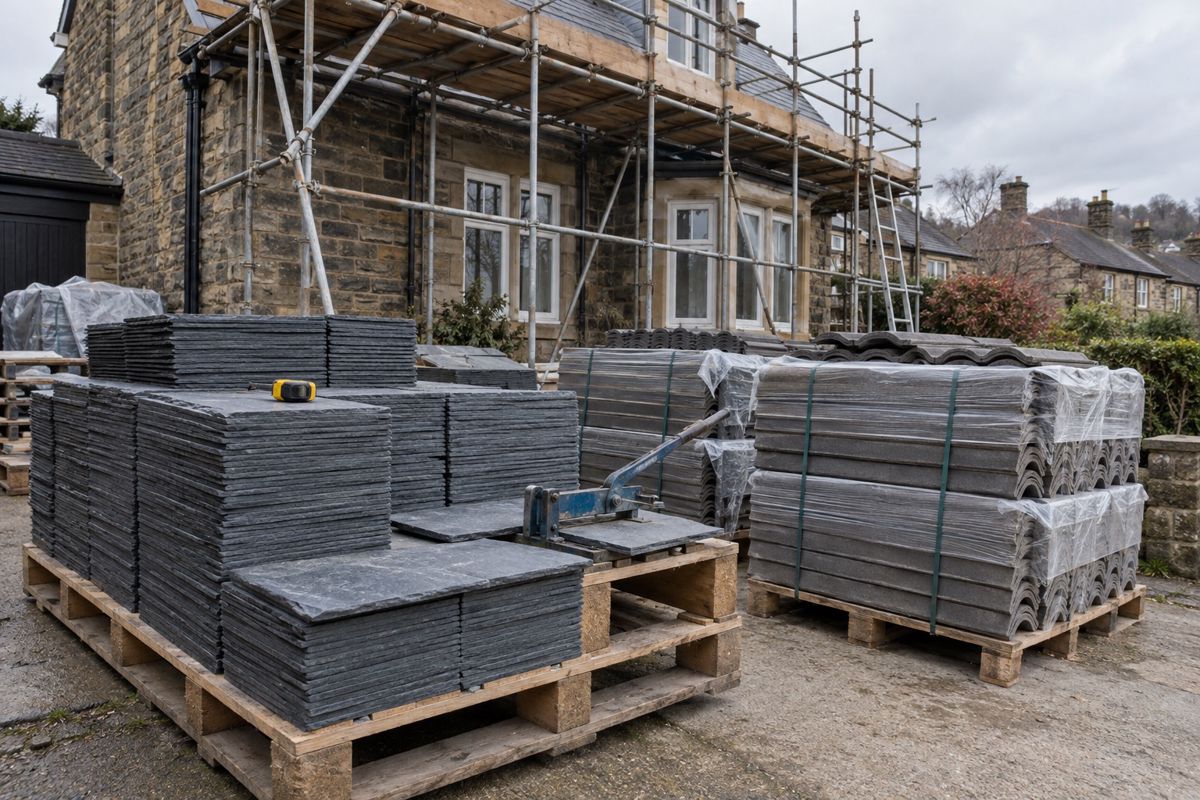
More expensive, longer-lasting and a better visual match for older stone houses. The price varies with the type and origin of the slate, so two quotes that both say natural slate can be quite far apart. Ask exactly what is being supplied.
Stone slate
Traditional sandstone slates are at the top of the range. They are heavy, and cutting and laying them is slow skilled work. If your existing stone slates can be reclaimed and laid again, that can reduce the bill, but you need enough sound ones to make it work.
What else adds to the cost?
Several items sit outside the covering itself, and they are where quotes most often differ.
- Scaffolding. Essential for safety, and a significant line on its own. Steep, narrow Sheffield streets can make it harder to put up.
- Timber repairs. Once the old covering is off, rotten battens or rafters may be found. Most quotes allow for a rate per metre, not a fixed total.
- Underlay and ventilation. Modern breathable membranes and proper eaves ventilation help the roof last longer.
- Lead work. Flashings at chimneys, abutments and valleys use lead, and lead prices move over time.
- Chimneys. Repointing, rebuilding or removing a stack all add cost.
- Fascias, soffits and guttering. Often replaced at the same time because the scaffold is already there.
- Dormers and rooflights. More detail work, more time.
Why do roofs in Sheffield cost what they do?
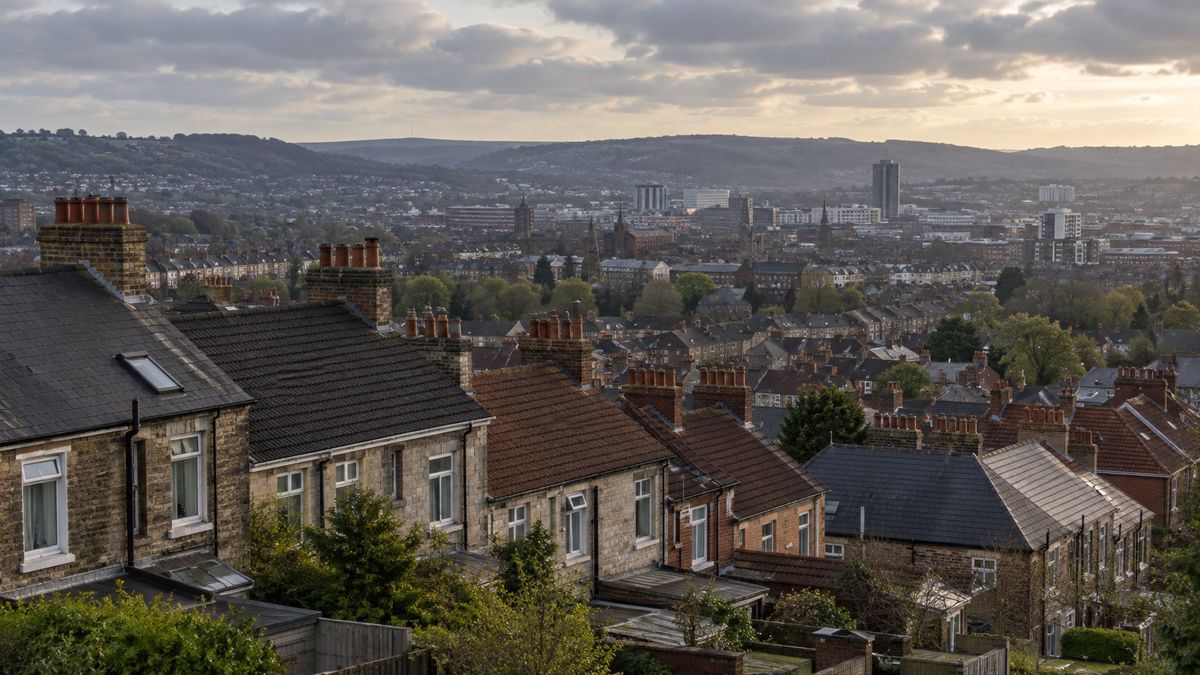
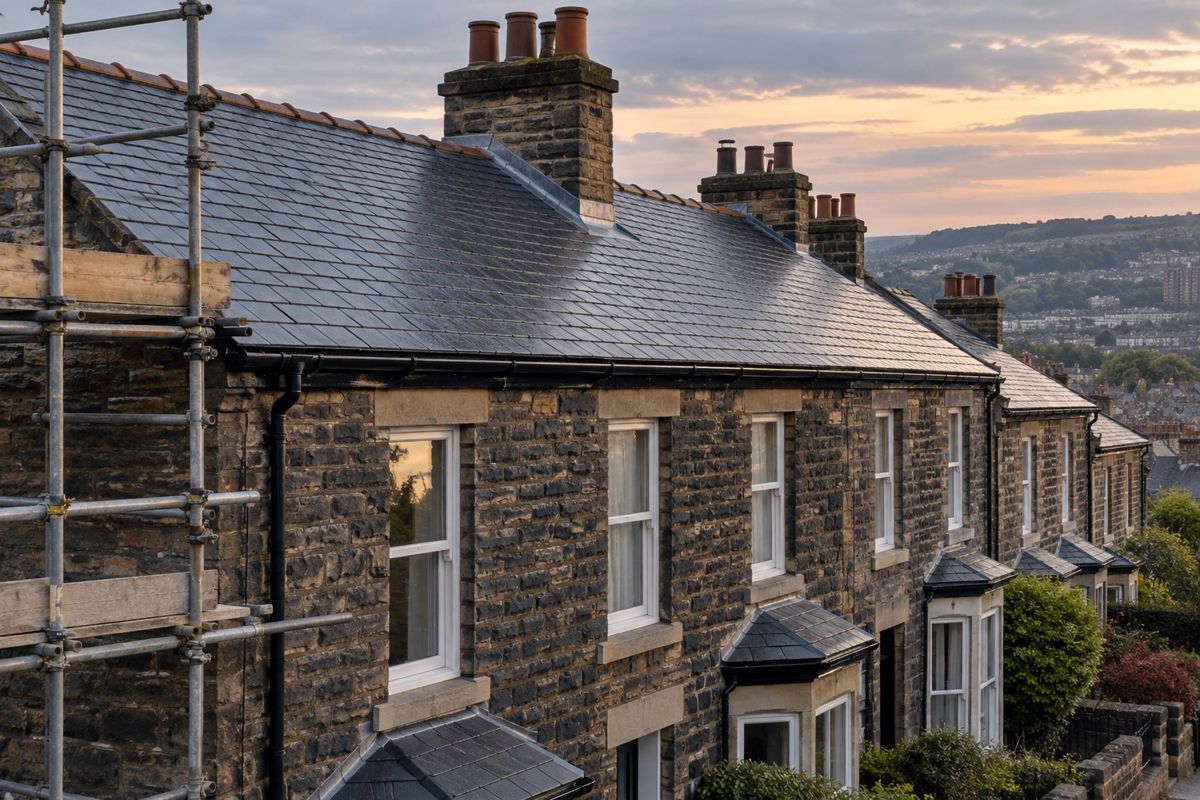
The city has features that influence the work. Much of the older housing is stone-built, with slate or stone slate roofs and lead details that need skill. Hilly sites mean scaffolding, deliveries and skips are harder to arrange, which adds time. Western and hilltop streets are exposed to strong winds, so good fixings and careful detailing matter more than they would in a sheltered spot.
Some neighbourhoods are in conservation areas, where the covering may need to match the original look. That can limit the choice and push the cost up. In a terrace, the roof line, chimney and gutter are often shared with the neighbour, and the work may need coordination. Check with Sheffield City Council about any rules for your address before you order materials.
How can I compare quotes fairly?
A cheaper total is not always cheaper work. These steps help you compare like with like.
- Get two or three written quotes from firms that have actually looked at the roof.
- Check that each one lists the covering, the underlay, the battens, the lead work, the scaffold and the waste removal.
- Check how extra timber repairs will be priced and who agrees them.
- Ask for proof of public liability insurance, and ask about any trade body membership. Do not rely on what is said over the phone.
- Ask about payment terms. Be cautious about large upfront payments.
- Look at recent local work if the firm can show it.
If one quote is far below the others, find out what has been left out before you accept it.
How long does it take, and do I need permission?
A typical house often takes several working days, but weather decides the real timetable. Wet or windy days stop roof work, and larger villas or stone slate roofs can take much longer. Ask for a realistic window, not a promise of a fixed finish date.
Replacing like with like is often treated as maintenance, but listed buildings and conservation areas are different, and changing the type of covering may need consent. Building regulations can apply to a re-roof, and the Party Wall etc. Act 1996 may matter where work touches a shared wall or chimney. These points are general, so confirm what applies to your own home.
What should I do next?
Start by finding out what you actually have. A close look at the roof, with photos, tells you whether you need a repair or a new covering, and it makes any quote easier to judge. If you think the roof has reached the end of its life, read our page on roof replacement in Sheffield, or ask for a written quote after a visit. If you are unsure, a roof inspection is a sensible first step.